

July 18, 2026
.png)
How to Maintain Your Tyres and Keep Your Car Safe
Your tyres do more work than any other part of your car. They carry the full weight of the vehicle, keep you gripping the road in wet weather and help your brakes stop you in time. When they’re neglected, your stopping distance increases, fuel economy drops and the risk of a sudden breakdown goes up.
The good news is that basic tyre maintenance is simple. With a few quick checks each month, you can keep your tyres in good condition, save money and stay safer on every journey.
1. Check Tyre Pressures Regularly
Driving with the wrong tyre pressure is one of the most common – and most overlooked – tyre problems.
Underinflated tyres:
- Wear out faster on the edges.
- Increase fuel consumption.
- Run hotter and are more prone to failure.
Overinflated tyres:
- Wear faster in the centre of the tread.
- Give less grip and a harsher ride.
- Are more likely to be damaged by potholes.
Aim to check your tyre pressures:
- At least once a month; and
- Before long motorway journeys or when carrying heavy loads.
You’ll find the correct pressures in your vehicle handbook, on a sticker inside the driver’s door frame, or sometimes inside the fuel filler flap. Use a reliable pressure gauge or a garage air line and always check tyres when they’re “cold” – ideally before you’ve driven more than a couple of miles.
Don’t forget the spare wheel if you have one. A flat spare is no help in an emergency.
2. Keep an Eye on Tread Depth
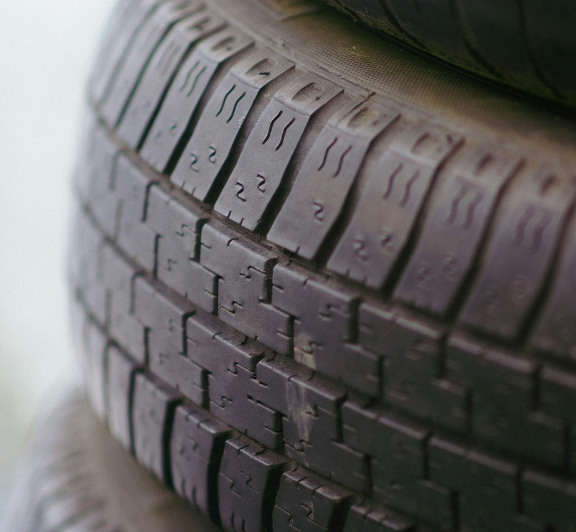
Good tread is essential for grip, especially in wet conditions. Worn tyres take much longer to stop and are more likely to aquaplane.
In the UK, the legal minimum tread depth is 1.6mm across the central three‑quarters of the tyre. However, performance starts to drop well before that. Many experts recommend changing tyres at around 3mm for everyday driving and before winter.
You can check tread depth by:
- Using a tread depth gauge;
- Looking for the raised tread wear indicators moulded into the grooves; or
- Using the “20p test” – insert a 20p coin into the tread. If you can see the outer band all the way around, your tread may be too low.
If one tyre is wearing faster than the others, or if wear is uneven across a tyre, it’s worth having alignment and suspension checked.
3. Inspect for Visible Damage
A quick visual inspection is one of the best ways to catch problems early.
Every few weeks, walk around the car and look closely at each tyre for:
- Cuts or splits in the sidewall.
- Bulges or blisters (often caused by hitting potholes or kerbs).
- Exposed cords or fabric.
- Nails, screws or other objects stuck in the tread.
Even if the tyre is still holding air, visible damage can make it unsafe – especially at higher speeds. If you see anything suspect, have it checked by a professional before continuing to drive long distances.
4. Don’t Ignore Slow Punctures or Warning Lights
Modern cars are often fitted with a Tyre Pressure Monitoring System (TPMS) that warns you if a tyre is losing pressure.
If the TPMS light comes on:
- Don’t just reset it and hope it goes away.
- Stop in a safe place and check the tyres visually for obvious punctures or sidewall damage.
- Top up the pressure to the recommended level and monitor it.
If the same tyre keeps losing pressure or the warning light returns, you may have a slow puncture, a leaking valve or corrosion around the wheel rim. These usually get worse over time, not better, so it’s best to have them inspected and repaired.
5. Rotate Tyres Where Appropriate
On many cars, the front tyres wear faster because they handle steering, braking and often most of the power. Rotating tyres can help them wear more evenly and extend their life.
However, rotation isn’t suitable for every vehicle – especially those with different tyre sizes front and rear, or directional tyres that can only rotate in one direction. Always check your owner’s manual or ask a technician before rotating tyres.
If rotation is recommended for your car, it’s usually done every 5,000–8,000 miles or at each service. A professional can advise on the correct pattern for your vehicle.
6. Drive in a Tyre‑Friendly Way
Your driving style has a big effect on tyre wear.
To make your tyres last longer:
- Accelerate smoothly instead of flooring the throttle.
- Brake progressively rather than slamming on the brakes.
- Take corners at sensible speeds to reduce stress on the sidewalls.
- Avoid hitting potholes, debris and speed humps at speed.
- Don’t rub tyres along kerbs when parking.
These habits reduce heat and mechanical stress, helping to prevent internal damage and uneven wear.
7. Match Tyres Correctly
Mixing very different tyres on the same axle can cause unpredictable handling, especially in poor weather.
Where possible:
- Use the same brand, size, speed rating and pattern on each axle.
- Never fit a lower speed or load rating than the manufacturer recommends.
- Avoid mixing budget tyres with premium tyres on the same axle.
When replacing a pair, always fit the new tyres to the rear axle (even on front‑wheel drive cars). This helps keep the car more stable in emergency manoeuvres and in wet conditions.
8. Know When to Repair and When to Replace
Not all damage means you need a brand‑new tyre. Many punctures in the tread area can be safely repaired if they meet certain criteria. However, replacement is usually necessary if:
- The sidewall is cut, bulged or torn.
- The tyre has been driven on while flat.
- Tread depth is already low.
- There are multiple punctures close together.
A qualified tyre technician can inspect the damage and advise whether a repair is safe and legal or a replacement is the only option.
9. Book Regular Professional Tyre Checks
Even with good habits, it’s easy to miss early signs of trouble. That’s why regular professional checks are so useful, especially if you:
- Drive long distances for work;
- Carry heavy loads; or
- Spend a lot of time on motorways.
A tyre specialist can:
- Measure tread depth accurately.
- Check for uneven wear and alignment issues.
- Inspect for internal and external damage.
- Set all pressures correctly and advise on replacements.
This kind of preventative maintenance is far cheaper – and far less stressful – than dealing with a roadside blowout or a failed MOT.
Key Takeaways
- Check tyre pressures at least once a month and before long journeys.
- Monitor tread depth and plan replacements before you hit the legal minimum.
- Look regularly for cuts, bulges and embedded objects.
- Drive smoothly and avoid avoidable hazards like potholes and high kerbs.
- Treat TPMS warnings and slow punctures as early alerts, not background noise.
- Use professional inspections and mobile tyre services to keep your tyres safe and road‑ready.
A few minutes of tyre maintenance each month can save you money on fuel and replacements – and, more importantly, help keep you, your passengers and other road users safe.

.svg)
.svg)